As reported by Entrackr, startup funding in India has dropped 47.5% in October 2026, with startups receiving approximately $678 million in funding. This drop illustrates the growing choice of investors. Early stage startups, MSMEs and rural entrepreneurs require a business plan, customer demand and revenue generation opportunities for getting funding. Access to investors and financial assistance must also be enhanced for small businesses located in rural areas and smaller towns and villages. What are the lessons that founders can take from this funding trend, and how can Foxhog Ventures help businesses grow? Let’s explore.
What Happened to Startup Funding in India in October 2026?
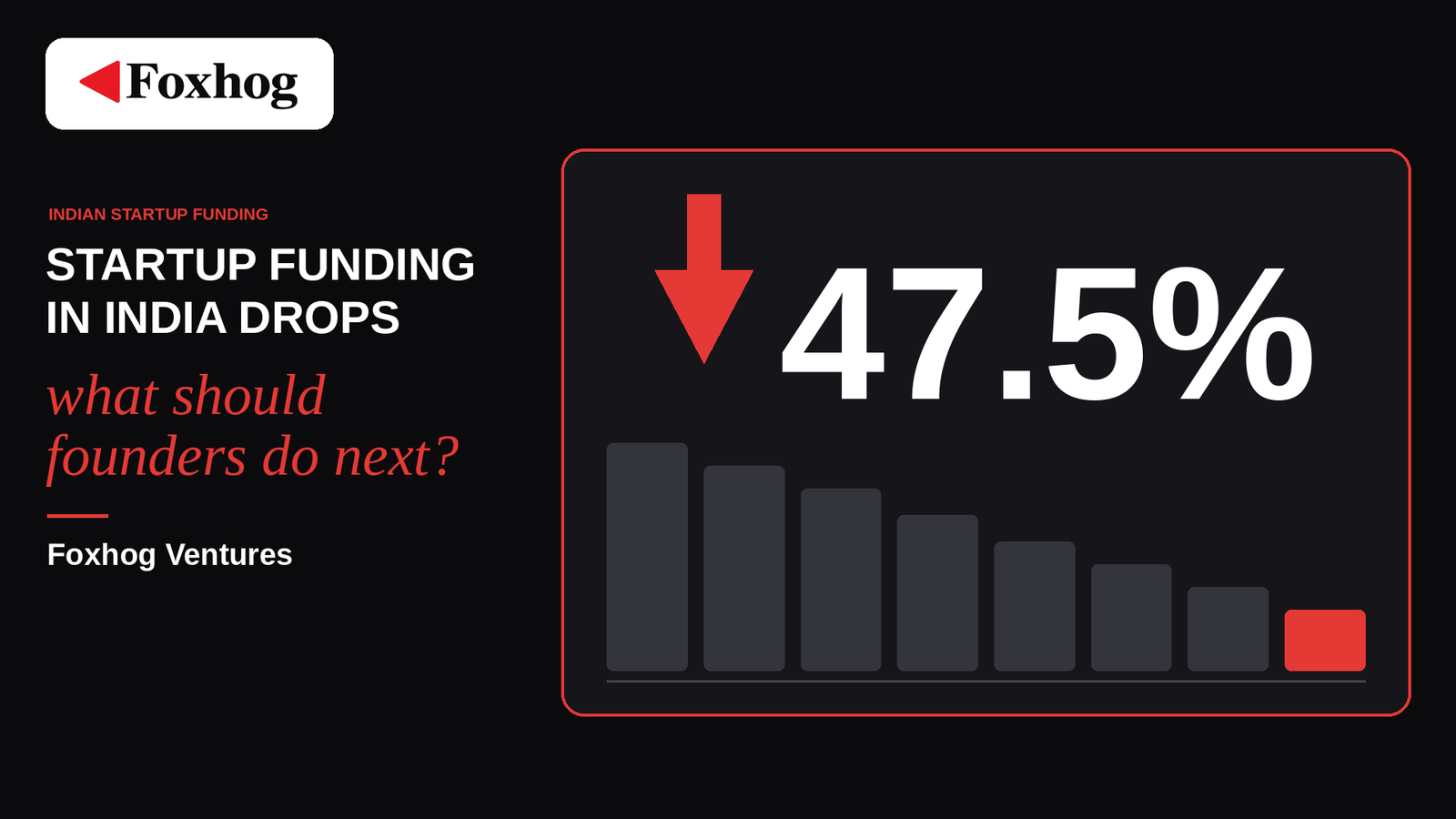
In October, the amount of funding that Indian startups bagged was approximately $678 million, according to Entrackr report published on 2 November 2026. It is down 47.5% from the previous month and 60.8% from the same month last year. It indicates investors are getting more discerning.
October 2026 Funding Figures at a Glance
Growth and late-stage startups pulled in $414.6 million through 20 rounds, while early-stage startups totaled $263 million through 79 rounds. No startup revealed they raised $100 million or more.
Which Sectors Attracted Investment?
The e-commerce industry was the most popular for investments at $182.69 million, followed by $131.12 million for artificial intelligence, while it was $104.61 million for healthcare technology. Semiconductor companies and manufacturing sectors also received investments.
What Do Early-Stage Funding Numbers Tell Us?
Around the seed stage, startups garnered $80.41 million in 41 transactions. This means the early-stage investors are still investing in startups. To get seed funding, the founders need a concrete business model, demand from clients and updated accounting books.
Why Are Investors Becoming More Selective in 2026?
The slowdown in startup funding in India indicates a more cautious approach by investors. There is more focus on the path to customer demand and profitability before the investment, and a greater emphasis on a well laid out, operational business model.
It takes more than a good idea these days for early-stage founders to land funding. To attract investment, a company needs to demonstrate that it can scale up and spend wisely.
Investors Want Strong Business Fundamentals
Investors seek startups with a straightforward business model – who are your customers, what problem do you need to address and how are you going to make money?
A startup should have:
- A clear plan to generate revenue.
- Real customers who need its product or service.
- A simple way to track income and expenses.
- Enough cash to manage daily business needs.
Profitability Matters Alongside Growth
Growing quickly does not always mean a business is doing well. Founders must control expenses, track cash flow and focus on sales. Investors prefer businesses that can grow without spending more than they earn.
Investors Look for Proof Before Providing Capital
Investors want to see product demand, repeat customers, sales records and a clear growth plan. As discussions around Tarun Poddar investor and Tarun Poddar venture capital reflect the wider funding conversation, founders should focus on building businesses that can show real progress before seeking investment.
What Should Early-Stage Startup Founders Do Next?
Investment in Startup Industry in India If you are a founder and your startup funding is decreasing in India, don’t get upset or discouraged. Instead, now you should focus on being better prepared for investors and work on these five steps:
1. Build a Clear and Practical Business Plan
Know the problem your startup addresses, your customers, your source of income and your aims.
2. Focus on Revenue and Customer Validation
Launch with an MVP. Take your product to real customers early, get feedback and make improvements before scaling.
3. Prepare a Strong Investor Pitch Deck
Describe your business concept, the demand for your product or service, your revenue model, your financial plans and how you intend to use the funding.
4. Build Relationships Before You Need Funding
Explore startup events, speak to angel investors and seek advice from founder mentors. Founder mentors such as Tarun Poddar can give founders some insights into the mindsets of startups and investors.
5. Explore Different Funding Options
Research angel investment, seed capital, venture capital, government grants and business loans. Select the one that fit your business.
SME Funding in India: How Can Small Businesses Access Growth Capital?
Not every small business requires venture capital funding to scale up their business. Many entrepreneurs require funds to manage their cash flow, purchase new equipment, add inventory, or expand their business. SME funding in India provides small scale entrepreneurs with a variety of options to raise funds in India.
Understand Your Business Funding Requirements
Figure out where you’re going to be needing your money once you’re ready to take out a loan. Do you need money for working capital, equipment, inventory, marketing or a new location? This plan will help you to know exactly what type of funding is best.
Explore Government and Institutional Funding Options
Small business proprietors might get loans supported by the CGTMSE from qualified lenders, MUDRA loans and PMEGP assistance for eligible fresh micro-enterprises. This will enable businesses to get money assistance without depending on traditional investors.
Improve Your Business Financial Records
Keep sales & expense records, segregate personal and business accounts, monitor incoming payments & generate basic financial statements. Having neat financial records puts you in a good stead for raising funds for startups in India.
Rural Entrepreneurship in India: Does the Funding Slowdown Affect Village Entrepreneurs?
It also impacts rural entrepreneurs who are in need of funds for procurement of equipment, stocks and business expansion. There are many who find it hard to get investor, lender and business advice.
However, there are opportunities to rural entrepreneurs in India on the dairy, poultry, food manufacturing, agriculture and local manufacturing fields. These companies have the ability to generate employment and contribute to the local community. They will be able to expand if they have access to appropriate finance and business guidance.
Why Rural Businesses Need Better Access to Finance
Village entrepreneurs often face four common challenges:
- Limited investor access: Many investors focus on startups in major cities.
- Lack of mentors: New business owners may struggle to find people who can guide them.
- Few market connections: Small businesses find it hard to reach buyers outside their villages.
- Limited finance options: Getting loans for equipment, stock or expansion can be difficult.
Business Opportunities in Rural India
Dairy and poultry, food processing, agricultural technology, local manufacturing, and rural retail offer business opportunities. These sectors can support local jobs and meet everyday needs.
How Rural Entrepreneurs Can Become Investment-Ready
Start with a small business plan, study local demand, keep clear financial records, connect with banks and lenders, and explore suitable government schemes. Understanding SME funding in India can help founders choose suitable finance options.
AI for Small Businesses: Can Technology Help Founders Grow with Less Capital?
Small businesses do not always need a large team or budget to manage daily work. With affordable AI tools, founders can handle customer questions, write product descriptions, track sales and plan stock. AI for small businesses can help owners save time and manage daily tasks with fewer resources.
Practical Uses of AI for Small Businesses
Small business owners can use AI for:
- Customer support: Answer common customer questions and manage messages.
- Marketing: Create social media posts, emails and product descriptions.
- Inventory: Track stock and plan future purchases.
- Sales analysis: Review sales records and spot buying patterns.
- Customer research: Understand customer needs and collect feedback.
Why Founders Should Use AI to Improve Business Operations
AI can reduce repetitive work, save time and help founders make better decisions. It can also help small teams manage tasks without hiring more staff too soon.
A growing Startup ecosystem in India offers rural entrepreneurs and startups additional pathways to compete by harnessing AI.
AI is a supporting instrument, and certainly not a substitute for customer desire, having a sound business model or reasonable business planning.
How Foxhog Ventures Supports Startup and Business Growth Beyond Funding
Foxhog Ventures and Its Focus on Early-Stage Businesses
Foxhog Ventures focuses on supporting startups and small businesses through funding-related support, business guidance and growth opportunities. Early-stage founders need more than money to build a business. They also need market knowledge, planning and the right connections.
Tarun Poddar Foxhog: A Focus on Startup and Rural Business Growth
Tarun Poddar is Founder and CEO of Foxhog Ventures. The company invests in and supports businesses – including those set up by Tier-2 and Tier-3 city entrepreneurs. This ties in to a rising trend for Rural entrepreneurship in India and the demand for investment and expert support and networks for local businesses to thrive.
Why Founders Need More Than Funding
Funding is only part of the puzzle: When it comes to building a business, entrepreneurs require a well-structured business plan, guidance, investments, networks and access to markets and the ability to sustain its growth into the future. These enable startups to make strategic choices.
What Does the October Funding Slowdown Mean for India’s Startup Ecosystem?
October’s 47.5% decline indicates founders need to put more thought in their approach before meeting investors. The market for startup funding in India is still moving, but investors do not have similar access everywhere.
Funding Opportunities Beyond Major Startup Cities
Bengaluru, Delhi and Mumbai because of their investor networks and business connections. KUTC allows investment in Tier-2 and Tier-3 cities. Approximately 50% of startups recognised by DPIIT are from the Tier-2 and Tier-3 cities.
The Growing Importance of Investor Networks and Mentorship
Founders want more than money. Connections to mentors, investors and customers are what will help businesses develop. This is when entrepreneurs such as Tarun Poddar India can play a role in broader startup development conversations.
What Could Shape Startup Funding in India in the Coming Months?
Investors confidence, revenue increase, AI companies, MSME support and business in villages will be the parameter for funding.
Key Takeaways for Founders: How to Prepare for the Next Funding Opportunity
The decline in startup funding in India is a reminder that founders need to prepare before approaching investors. Here are eight steps to follow:
- Build a clear business model: Know your customers, costs and revenue sources.
- Test your product: Get feedback from real customers.
- Maintain financial records: Track sales, expenses and cash flow.
- Prepare a strong pitch deck: Explain your problem, solution and funding needs.
- Focus on revenue: Build steady sales and manage spending.
- Explore funding options: Consider seed funding, SME funding in India and suitable government schemes.
- Build connections: Meet investors, mentors and other founders.
- Use affordable AI tools: Help your small business save time and manage daily tasks.
These steps can help founders become investment-ready and find growth opportunities.
Conclusion: Prepare Your Business for the Next Funding Opportunity
With a 47.5% decrease in startup funding in October 2026, founders should do their homework. While investors will continue to fund startups, they will want to see a solid business plan, demand from customers and be profitable.
If you own a startup, MSME, or a business in the rural sector, strengthen your foundation before seeking funding. Consider funding sources, leverage AI for your small business, and develop investor relationships.
Foxhog Ventures, led by Tarun Poddar, provides capital and support to underrepresented entrepreneurs and startups. The goal is straightforward: enable founders to get the resources, capital, and guidance they need to succeed.


Leave A Comment