Get up to 2% off on your Rupay Credit Card with Foxhog.
More Detailscustomercare.ind@foxhogmail.com
customercare.ind@foxhogmail.com
Get up to 2% off on your Rupay Credit Card with Foxhog.
More DetailsOur Corporate Credit Line and Pay later Services is only Available in India, USA & Germany.
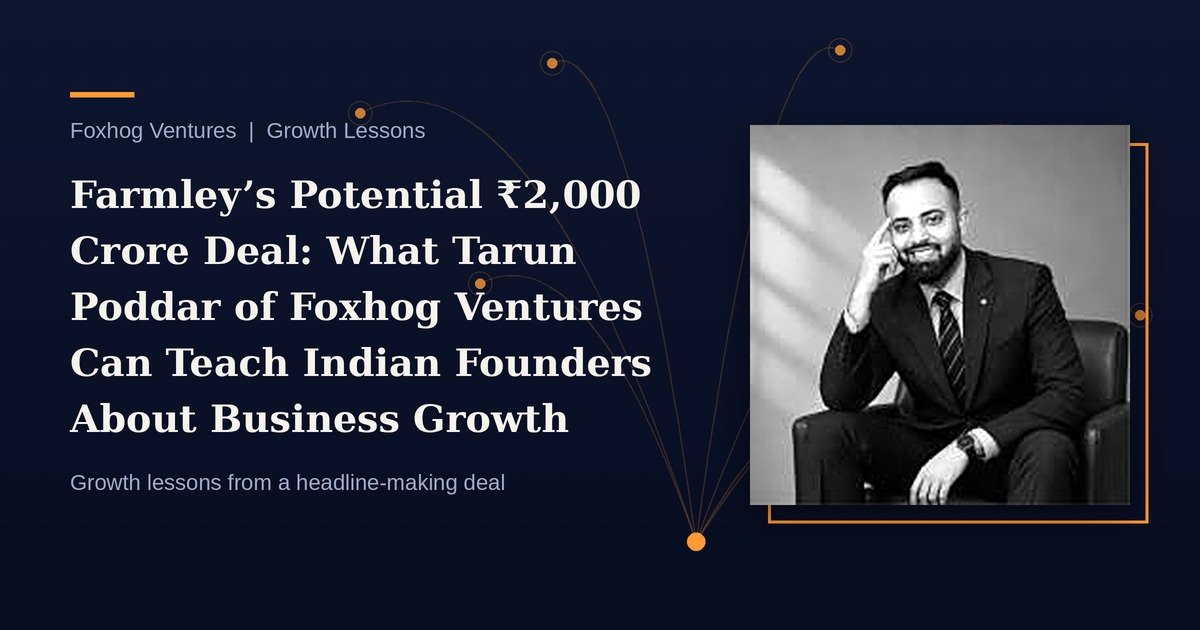
India’s snack market is drawing interest from major FMCG companies. According to The Economic Times, Emami, ITC, Britannia, and Orkla India are among the companies reportedly interested in Farmley, with a potential deal valuing the brand at around ₹2,000 crore. This development highlights the importance of Farmley business growth and offers useful lessons for Indian founders on building customer trust, expanding sales, and preparing a business for future investment.
This reported deal offers useful lessons for Indian founders. It takes more than a great product to build a business. The founders must know the needs of the customers, control expenses, gain trust from the customers and plan for growth.
In Farmley’s tale, it’s a business model and robust customer relationships that make all the difference for fledgling start-ups and rural entrepreneurs. It also provides a chance to explore the relationship of Tarun Poddar to the broader debate on startup financing and business expansion. Foxhog Ventures believes it can help startups, small businesses and entrepreneurs grow.
The main takeaway is that you need to create a business that addresses a genuine issue and gains the trust of your clients.
Farmley began in 2017 as a dry fruits and nuts company. The company has been focusing on the Direct-to-Consumer (D2C) segment in 2021, making its products more accessible to the masses. It grew in online marketplaces and fast-commerce, assisting the customers to purchase snacks easily.
Here are some of the lessons that Farmley has to impart to early-stage founders:
Farmley demonstrates for entrepreneurs, even in small towns and rural areas, how a company can expand by knowing their customers and changing their selling approach. These lessons also dovetail into the broader conversation about Foxhog Ventures and what startups need to do to create sustainable businesses.
The interest shown by the big FMCG companies in Farmley has shone a light on the value of growing brands. The Economic Times said a possible transaction worth of around ₹2,000 crore has been put together for the healthy-snacking brand. This is an estimated, not guaranteed, price.
Valuation of a company is not just based on sales. Buyers also look at customer demand, profit margins, brand strength, market reach, and room for growth.
For Indian founders, the key lessons are:
For an early-stage founder—whether a rural entrepreneur or not—the following steps can be used to get a company ready for financing and/or acquisition. They also provide a good indicator of the involvement of Foxhog in the broader startup financing debate.
The Farmley growth story has lessons for entrepreneurs seeking to create a company that can draw customers and investors. These are five actions that startups and rural entrepreneurs in the early stages can learn from.
Understand what customers need before launching a product. Focus on quality, fair pricing, and reliable service to earn their trust.
Farmley moved from B2B dry-fruit supply towards a consumer brand. Founders should review customer demand and explore sales channels that suit their business.
Clear product information, consistent quality, and good customer service help small businesses earn repeat purchases.
Monitor sales, costs, profit margins, and cash flow. Clear financial records also help founders prepare for investor discussions.
Set realistic goals, build a reliable team, and prepare for higher demand. Founders exploring Foxhog Ventures can also study how venture capital and business guidance may support startup growth.
Investors look beyond a business idea before putting money into a startup. They want to see a clear plan, real customer demand, and a team that can manage growth. For early-stage founders, understanding these factors can make funding discussions easier.
Here are five things investors often assess:
For rural entrepreneurs and small businesses, strong local demand and clear financial records can help build investor confidence.
At Foxhog Ventures, these topics offer a useful starting point for founders preparing to seek funding.
A good idea isn’t enough for a startup to grow. The founders require funding, guidance to their business, and a detailed strategy to connect with customers. This is particularly true for those small businesses and entrepreneurs in less served areas.
Tarun Poddar CEO and founder of Foxhog Ventures would be relevant to this topic for the focus area on early stage startups, small and medium businesses, and rural entrepreneurs.
Venture capital for founders can be used to develop a product, recruit talent or expand to new markets. They can also get business advice to help them control their costs and plan for growth.
Foxhog Ventures appears to be a company that provides funding and consulting services to businesses. It focuses on smaller cities and less developed areas, aligning with the needs of entrepreneurs who may lack access to investors.
The Farmley story offers useful lessons in Farmley Business Growth, including understanding customer needs, planning for sustainable growth, and maintaining clear financial records. Although there is no confirmed information that Foxhog Ventures is involved in the Farmley deal, the brand’s reported growth offers practical insights for entrepreneurs preparing to expand their businesses. These lessons show why a clear business plan, customer trust, and careful financial management matter when building a business for long-term success.
Through Farmley’s reported growth, the possibilities of a business reaching a broader audience by knowing their needs and establishing trust with them is apparent. These lessons can be applied to those who are rural entrepreneurs and small business owners in India.
For founders outside major cities, access to capital and market connections can support business growth. Tarun Poddar is relevant to this wider discussion through Foxhog’s stated focus on startups, small businesses, and rural entrepreneurs.
Farmley’s reported deal remains a potential transaction, not a confirmed acquisition.
Investors and buyers want to understand how a business earns money, manages costs, and plans for growth. Founders who keep their records clear can make this process easier.
For early-stage startups and rural entrepreneurs, these steps can help build trust with lenders and investors. As Tarun Poddar and Foxhog Ventures focus on business growth and funding, founders should prepare their businesses before seeking investment or considering a sale.
Farmley’s potential ₹2,000 crore deal shows why customer trust, steady sales, and a clear business plan matter for growing companies. Indian founders can learn from its growth by understanding customer needs, tracking costs, and building a brand people trust.
For early-stage startups and rural entrepreneurs, the lessons from Farmley business growth also apply. Start by solving a real customer problem, keep clear financial records, and plan each step before expanding.
Tarun Poddar is relevant to this wider discussion through Foxhog’s stated focus on supporting startups, small businesses, and underserved entrepreneurs. Founders who seek investment should prepare a clear growth plan and understand their funding needs before approaching investors.
Farmley’s reported deal interest is not a completed acquisition, but it offers a useful lesson: build a business on strong foundations before aiming for a larger market.


One Reply to “Farmley’s Potential ₹2,000 Crore Deal: What Tarun Poddar of Foxhog Ventures Can Teach Indian Founders About Business Growth”
What To Do After Startup Funding | Foxhog Ventures, October 12, 2026
[…] plan should match the company’s growth strategy. Every major expense should have a clear business […]